It's ten PM on a Sunday night. Your next episode is supposed to record in three days, and you have exactly zero guests booked. So you open your DMs, scroll your follower list, and start firing off "hey, would you ever want to come on my show?" messages to anyone who looks vaguely interesting. Maybe someone says yes in time, but more likely they don't, and you skip a week, and skipping a week turns into skipping a month.
We've all lived some version of that. I've done it more times than I'd like to admit, and I can tell you the panic never actually motivates you. It just makes you dread the week.
The real problem isn't finding guests, it's booking one at a time
The thing most creators miss is that the scramble isn't a sourcing problem. It's a structure problem. When you book one guest at a time, you're always starting from zero. Every single week you're back at the beginning, sourcing, pitching, and hoping, with no margin for anything to go sideways.
And things will go sideways constantly. A guest cancels the morning of, ghosts you after saying yes, and a "sure thing" gets delayed due to a work emergency. When you're booking one at a time, every one of those is a full-blown crisis, because there's nothing behind it. That constant low-grade stress is a slow on-ramp to podfade. Nobody quits a podcast in a dramatic moment. They quit because the weekly weight of "who's on this week" finally outgrows the joy of making the thing.
What a guest pipeline actually is
Sales teams solved this problem decades ago, and we can borrow from them. A pipeline is just a set of stages that people move through, and the whole point is to always have at least one person (ideally more) at every stage.
For an interview show, the stages look like this:
- Prospects: your running list of people you'd love to have on
- Outreach sent: you've pitched them and you're waiting to hear back
- Booked: the date is on the calendar
- Recorded: it's in the can, sitting safely in your buffer
- Follow-up: past guests who might come back or refer someone new
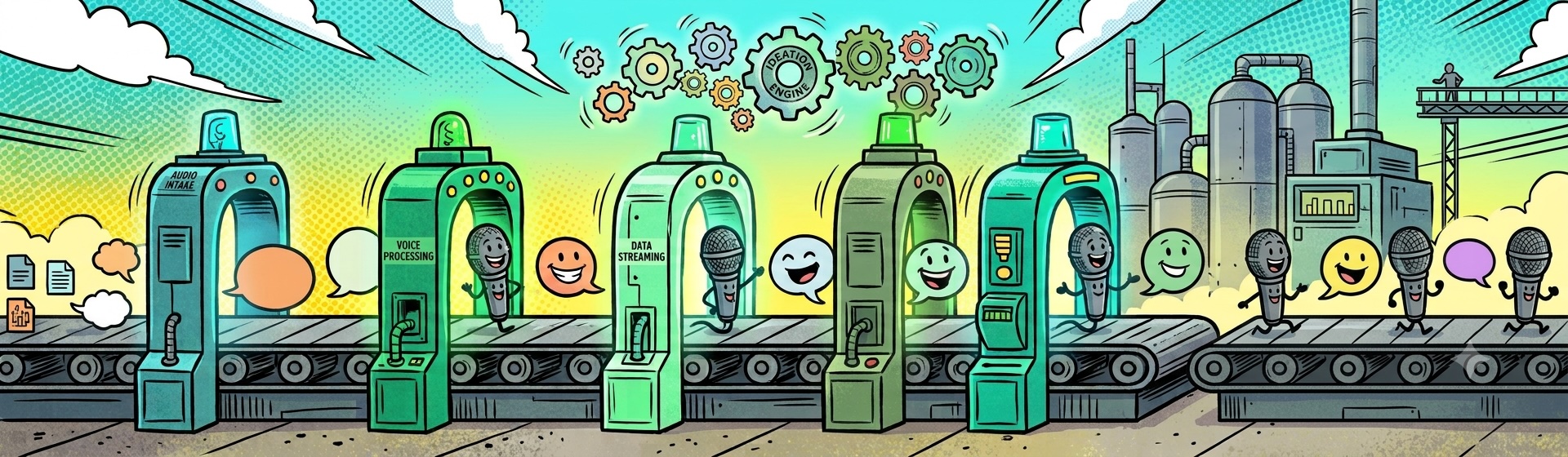
The magic isn't in any single stage. It's in keeping all of them populated at once. When your booked column empties out, there's already someone moving up from outreach to fill it. When outreach thins out, you pull from prospects. You're never sourcing from nothing, because the machine is always turning.
How to build one without it becoming a second job
I know what you're thinking, because I thought it too. This sounds like a lot of overhead for a hobby, or even a side business. It isn't, if you build it as a habit instead of a project.
Start with the prospect list. Open one doc, one note, one spreadsheet, whatever you'll actually be going to reopen, and start dumping names. Guests you've enjoyed on other shows, people in your niche, that person whose post you keep thinking about. Don't filter yet, just collect.
Then set a small weekly outreach quota and hold it. I'd say reach out to two or three people every week, and here's the part that matters most: keep doing it even when you're fully booked. Especially when you're booked. The temptation is to stop pitching the moment your calendar looks healthy, and that's exactly how you end up back at zero six weeks later. The quota is boring on purpose, but boring is what keeps the pipeline full.
Keep everything in one place so you can see the whole board at a glance, and always try to stay a couple episodes ahead of your publish date. A pipeline that's two deep is worlds calmer than one that's zero deep.
This is where the whole system clicks together
If you've been following along with our guest-booking posts, you might notice this pipeline is really just all of them working as one system.
Finding guests for a new or small podcast is what keeps your prospects column from running dry. Your outreach templates are what move people from prospect to booked without you rewriting the same message forever. A simple guest tracking system is the pipeline's memory, so you never double-ask someone or lose a warm lead. Finally, your buffer of recorded episodes is your insurance policy.
That buffer is why we keep hammering on the one-episode buffer and knowing what to do when a guest cancels last minute. A cancellation only hurts when there's nothing behind it. With a full pipeline, a last-minute drop is a shrug, not a disaster, because you've already got a recorded episode ready and two more prospects mid-conversation. Each of those earlier posts was one gear, and this is the whole guest booking engine assembled.
A full pipeline is what makes an interview show survivable
Here's where the payoff comes in. Interview shows don't die because the host runs out of talent or ideas. They die because the host runs out of energy fighting the calendar. Consistency isn't a personality trait you either have or you don't. It's a byproduct of a system that removes the weekly panic before it starts.
A pipeline is that system, and it's the difference between a show that quietly disappears after episode seven and one that's still running strong at episode two hundred. You don't need more discipline because you need a machine that's always turning, so you're never staring at an empty Sunday night again.
Keep the panic out of your Sunday nights
If this is the kind of systems-over-willpower thinking that keeps you creating, that's exactly what we're about at The Steady Pack. Subscribe to the podcast and join the newsletter so every new system lands in your inbox before you need it.
And if you'd rather not run this pipeline out of a spreadsheet you'll forget to open, that's the whole reason we built Unleashed Podcasts. It runs the stages, tracks your outreach, and reminds you when a slot's opening up, with Daisy nudging you to keep pitching even during the weeks you feel booked and safe. She's a very good dog about not letting the pipeline run dry.
