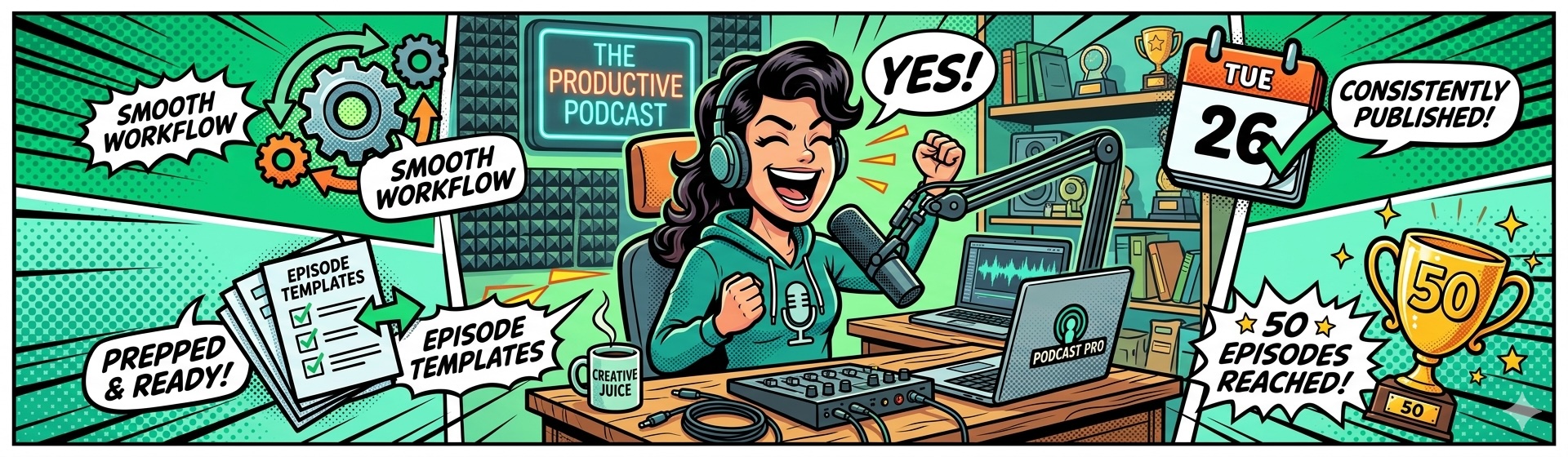
Podfade Is a Systems Problem, Not a Motivation Problem
Scott Keck-Warren • May 31, 2026
You start your podcast with genuine excitement. You map out episode ideas, you buy the microphone, you tell your friends. The first few episodes go up, and even though the numbers are small, you feel like you're doing something real.
Then, somewhere around episode six, or twelve, or twenty, the friction starts winning.
You miss a week because life got busy, and the guilt of missing a week makes it harder to come back. You come back, but the episode feels like a chore instead of a creative outlet. You check your stats, and they're basically flat. You start wondering if it's worth it. Then you just... stop.
That's podfade. And it happens to somewhere between 50 and 80 percent of podcasts, depending on which study you read (though I'd honestly guess the real number is higher, because most podcasters don't announce when they quit).
The story we tell ourselves when we quit
The most common explanation I hear from people who stopped is: "I lost the passion for it." Or a close cousin: "I ran out of ideas." Or the brutally honest version: "I just couldn't make myself do it anymore."
All of those feel true in the moment. But I think they're describing a symptom, not the actual cause.
Passion doesn't evaporate on its own. Something drained it. The same person who couldn't make themselves record episode fifteen felt plenty motivated back when they were planning the show. What changed wasn't their interest in the topic. What changed was how hard the work had become relative to the reward they were getting from it.
The problem wasn't motivation. The problem was that the podcast had become a source of friction and stress instead of a system that runs.
What actually causes podfade
If I had to name the three real culprits, they'd be friction, inconsistency, and a broken feedback loop.
Friction is anything that makes showing up harder than it needs to be. No template for show notes, so you start from scratch every time. No defined recording day, so it drifts around until it falls off the calendar entirely. Audio files scattered across three folders. Guest coordination is happening in different email threads. Every one of those is a small tax on your energy, and they compound. When recording an episode requires twenty micro-decisions and an hour of setup overhead, the emotional cost of "let me do this today" eventually exceeds what you're getting back.
Inconsistency is what happens when you don't have a cadence locked in. A weekly show that sometimes goes every five days, sometimes every ten, sometimes skips a week, never builds any internal momentum. You can't batch ahead because you're never sure when the next one is due. Your audience doesn't develop an expectation. And you don't develop a habit. Habits form from repetition in a consistent context, and if the context keeps shifting, the habit never sticks.
The feedback loop is the one people talk about least. Early podcasts almost never have meaningful audience response. If your only signal that the work matters is subscriber count and download numbers, and those numbers are small and flat for months, you're essentially running on fumes. You need some kind of feedback loop that tells you the work is real and worth continuing, and download stats almost never provide that in the early stages.
Systems that actually keep you in the game
None of these is complicated. They're also not glamorous. But they're the things that separate podcasters who are still publishing in year two from the ones who stopped in month four.
Templates for everything that repeats
Your show notes should have a template. Your episode brief should have a template. Your guest outreach email should have a template. The goal isn't to make everything identical. The goal is to eliminate the blank-page problem from every task that isn't actually creative. The creative work is picking the topic, developing the ideas, and having the conversation. Formatting show notes is not creative work and shouldn't require a fresh start every time.
A locked recording day.
Not "I'll record when I have time." An actual recurring block on the calendar. Same day, same time, every week (or every two weeks, or whatever your cadence is). This is maybe the simplest system on the list and also the one with the highest return. A recurring block is hard to ignore. "I'll find time eventually" disappears without a trace.
Batching to build a buffer.
Recording one episode at a time, right before it's due, is the highest-friction possible approach to podcasting. Batching two or three episodes in a single session means you have breathing room. You can take a week off without going dark. You can be sick without missing a publish date. The buffer isn't just logistical. It also reduces the psychological pressure of every single recording session, which is where a lot of the "I just couldn't make myself do it" feeling comes from.
Tracking output, not just stats.
Your download numbers are not something you control. Your episode count is. Tracking the things you control gives you a feedback loop that doesn't depend on audience size. "I've published 18 episodes" is a real accomplishment, whether you have 50 listeners or 5,000. It also gives you a visible record of the work, which your brain genuinely needs during the stretches when no other signal is coming back.
A quick note about where we're at
We launched The Steady Pack's own YouTube channel not too long ago. At the time I'm writing this, we're in single-digit subscribers. I'm not going to pretend that doesn't sting a little.
But we've grown other channels to thousands of subscribers over time, working through exactly these stages. We know the process works. We know the early numbers are a terrible proxy for whether the work is worth doing. And we know the way you stay in the game long enough for the numbers to reflect reality is to have systems good enough that showing up doesn't require a heroic act of willpower.
That's what this is about. Not grinding through the hard part on pure grit. Building things so the hard part isn't quite so hard.
One tool worth knowing about
We built Unleashed Podcasts partly because these systems work better when they have somewhere to live. Episode tracking, task management across your whole workflow, output metrics that keep you focused on what you can actually control. It's free to try always at unleashedpodcasts.com if you want to try it.
Podfade is not inevitable. It's not a character flaw. It's what happens when the friction exceeds the reward for long enough. Fix the friction, build the systems, and you give yourself a real shot at still being here in year two.
Shareable Images

Never Miss an Episode
Subscribe to The Steady Pack and get weekly systems, accountability tips, and strategies for consistent creators.
Join the pack and build systems that help you stay consistent.Need help organizing your podcast workflow?
Unleashed Podcasts helps you stay organized with best practices guidance and tools that reduce friction in your podcast creation process.

Social image checklist 3 missing