Why gamification works when 'love the process' advice doesn't
Scott Keck-Warren • May 3, 2026
You've read the advice, set the schedule, show up and record, or write, or film, and then you sit back and wait for the feeling everyone talks about. That sense of accomplishment. The satisfaction of having made something. The internal pull that's supposed to keep you coming back next week.
And then nothing happens.
Not nothing dramatic, not burnout or despair, just a nothing. You hit publish and you feel about as rewarded as you do after doing laundry. You did the thing, but there was no spark. No fire in your chest. No reason your brain is registering this as worth doing again. Especially when there are one or three views and one of them is from your Mom (Hi Mom!).
I've been there and if you're reading this, I'm guessing you have too.
Not every creator naturally experiences creative work as intrinsically rewarding. And if you've been treating your lack of internal motivation as a character flaw, I'd suggest you put that idea down and leave it on the floor.
What intrinsic and extrinsic rewards mean
Intrinsic motivation is when the activity itself is the reward. You create because creating feels meaningful, satisfying, or enjoyable. The work is its own reason.
Extrinsic motivation is when something outside the activity provides the reward. You create because you'll get a badge, points, a paycheck, or praise from people whose opinions matter to you.
Most personal development advice treats intrinsic motivation as the goal and extrinsic motivation as a lesser substitute, a crutch for people who haven't found their "why" yet. I think that framing causes real harm, especially for new creators.
Both kinds of motivation are real and legitimate. Neither one is cheating. And for a lot of people, the extrinsic version is the only version available for a while as your mom remains your only subscriber
Most productivity advice assumes you already feel the pull
The problem with a huge chunk of content creation advice is that it's written by people for whom the creative work already feels intrinsically rewarding. They love making things. They'd do it even if no one watched. When they say "fall in love with the process," they're describing their own lived experience, and they're assuming you share it.
But a lot of creators don't. Especially in the early months, when there's no audience, no feedback, no signal that the work is landing anywhere. You're essentially shouting into a room and someone keeps telling you to enjoy the sound of your own voice. For some people, that's genuinely satisfying. For others, it just feels exhausting and a little sad.
When the advice is "connect with your deeper why" and your deeper why isn't yet strong enough to get you out of bed on a cold Tuesday morning, you're left thinking something is wrong with you. There isn't. You're just in the early stage, and the internal reward system hasn't had enough time or enough feedback to calibrate yet.
Gamification isn't a crutch. It's scaffolding.
A scaffold isn't a permanent structure. It's what you put up while you're building the real thing. Construction workers don't apologize for using scaffolding. Nobody looks at a building going up and says, "wow, they must not really believe in this project if they need all those support structures."
Gamification, things like streaks, badges, points, levels, milestone tracking, gives your brain an external reward signal while the internal one is still developing. Every time you log a completed episode or hit a streak milestone, your brain gets a little hit of "I did a thing and the thing was recorded." That matters more than it sounds, because motivation follows action, not the other way around.
The internal connection to your creative work tends to grow over time, as the work gets easier, as the audience starts to build, as you develop your own voice and taste. But you have to stay in the game long enough for that to happen. Gamification helps you stay in the game.
Practical ways to build this into your workflow
You don't need a platform with badges built in to start using this approach (though it helps). There are a few low-friction ways to add external reward scaffolding to whatever workflow you already have.
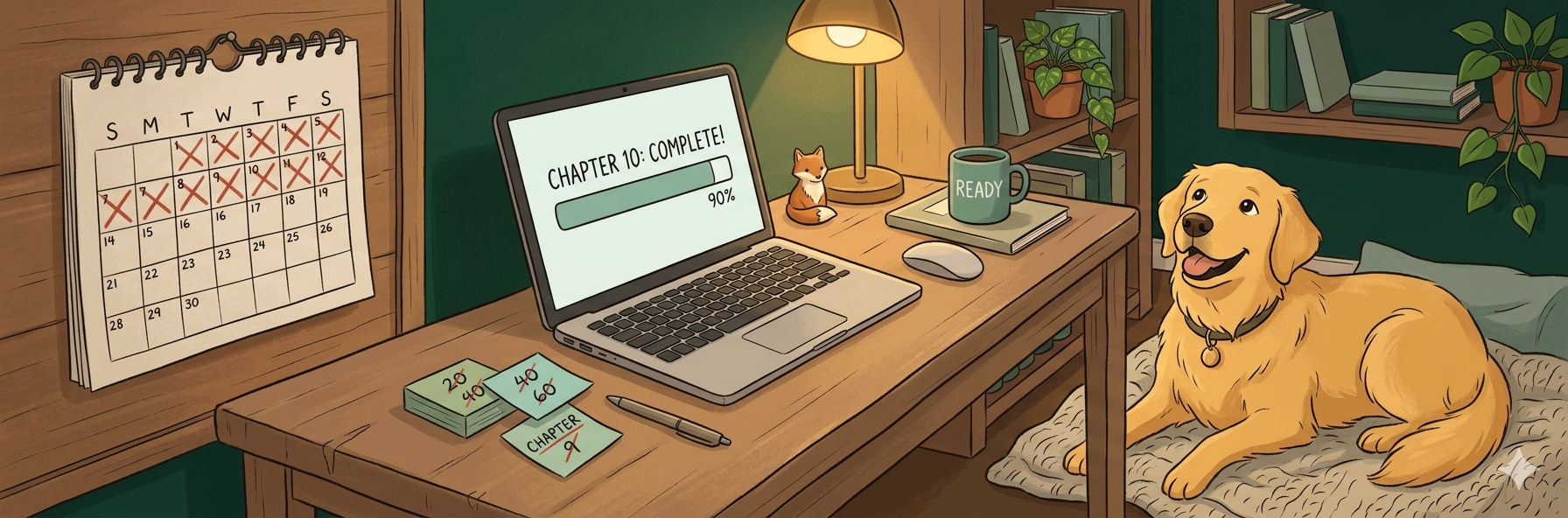
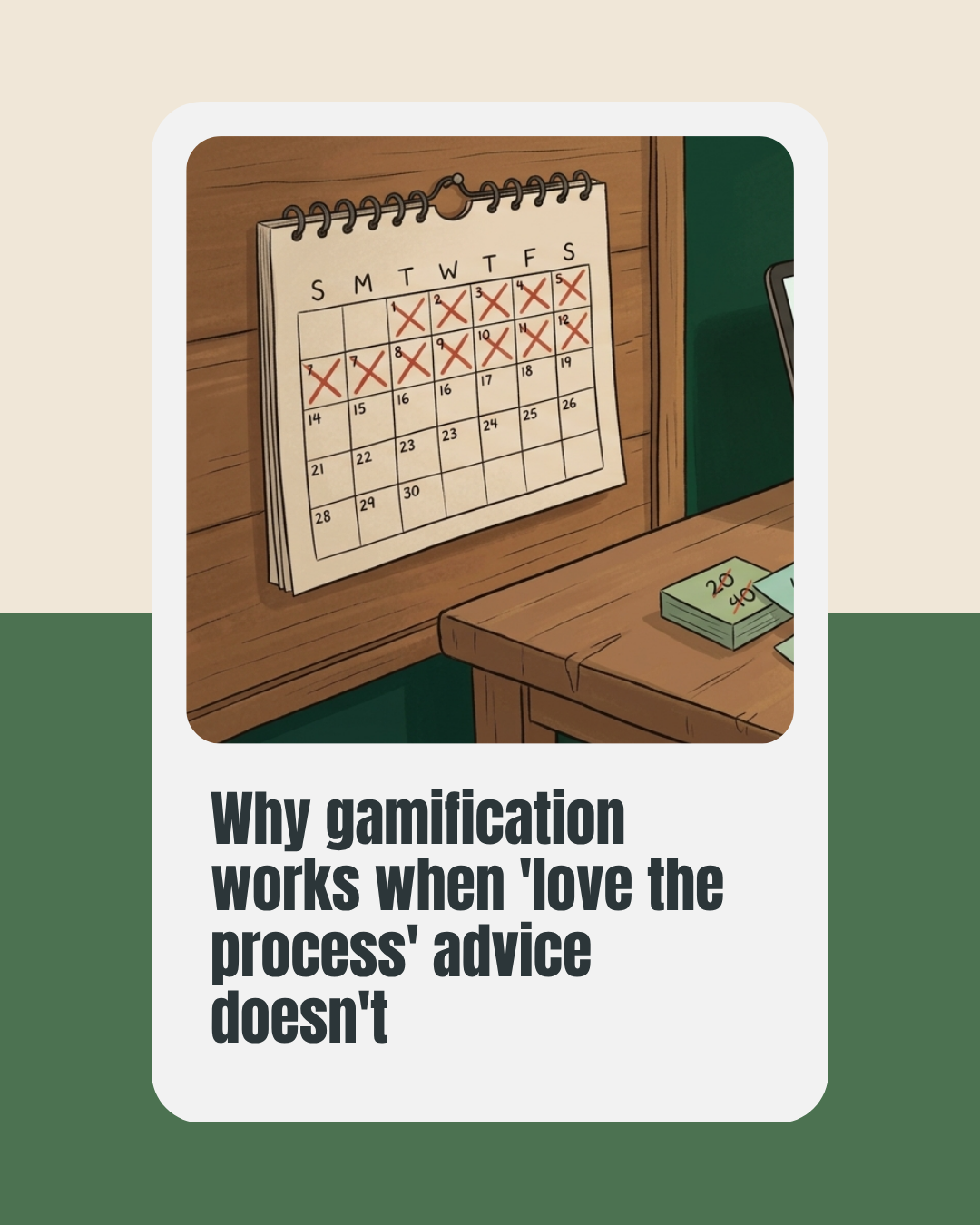
A streak tracker is a good starting point. It doesn't need to be fancy. A calendar on the wall where you mark an X on every day you create something works fine. The goal is to build a chain you don't want to break. The streak becomes its own motivation, separate from how you feel about the content itself. Even if Duo isn't breathing down your neck about it.
Milestone tracking is a close second. Writing down "episode 1, episode 5, episode 10, episode 25, episode 50" on a piece of paper and checking them off as you hit them gives your brain small wins to look forward to. The gap between where you are and "episode 100" can feel crushing. The gap between where you are and "episode 10" is survivable. When you hit a milestone give yourself a physical reward like a cake or that new Lego set you've been waiting with 2000 pieces.
If you're a spreadsheet person, a simple points system can work well. Assign point values to different creative tasks. Record an episode: 10 points. Write the show notes: 5 points. Post to social: 2 points. Total up your points at the end of each week. This sounds a little silly until you realize you're actually checking your spreadsheet more than you're checking your subscriber count, which means you're measuring something you control instead of something you don't.
You're giving your brain a consistent, repeatable signal that the work is being done and more importantly counted, even when the world hasn't noticed yet.
One more thing
We've built badges and experience points into Unleashed Podcasts specifically because of this. When you log completed episodes, hit milestones, or work through your weekly task list, you earn XP and unlock badges. It's a deliberate system for giving creators an external reward loop while the internal one develops, not just decoration.
If you're someone who has tried the "fall in love with the process" advice and found it didn't land, this was built with you in mind. You can check it out at unleashedpodcasts.com/.
The internal connection to your work is real and it's worth building toward. And there's nothing wrong with using scaffolding while you get there.
Shareable Images
Never Miss an Episode
Subscribe to The Steady Pack and get weekly systems, accountability tips, and strategies for consistent creators.
Join the pack and build systems that help you stay consistent.Need help organizing your podcast workflow?
Unleashed Podcasts helps you stay organized with best practices guidance and tools that reduce friction in your podcast creation process.

Social image checklist 3 missing